Entry Tactics
Wick Low
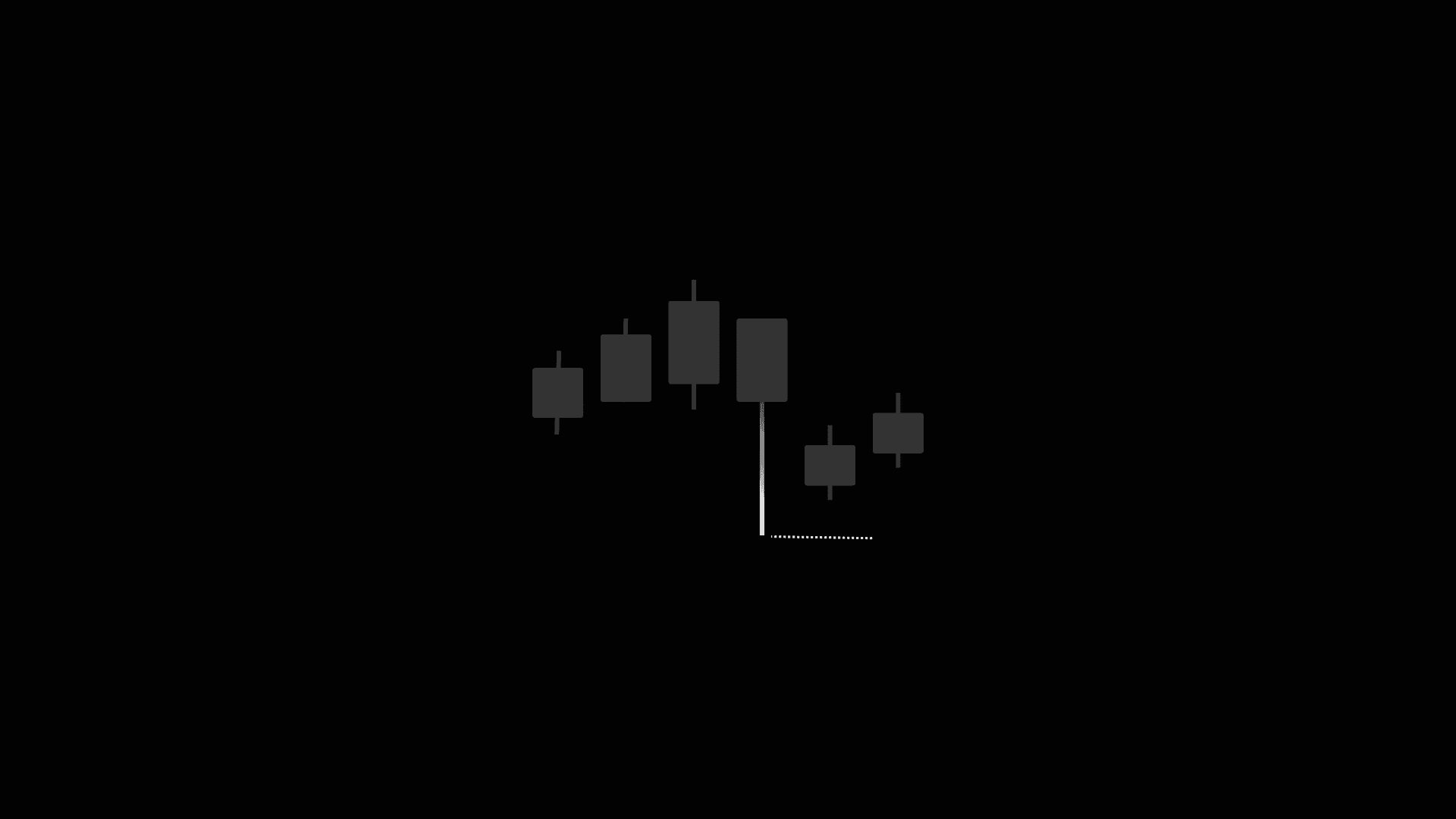
How I use the low of a candle's wick as a structural reference for stop placement and defining where my read is wrong.
 Nick SchmidtPublishedUpdated
Not every wick matters to me. A small lower wick is usually just normal price action. But when I see a big lower wick on a weekly candle, one where the wick is large relative to the body, I know the stock sold off hard during the week and recovered before the close. I read the size of that recovery as evidence of demand, not proof of who bought or why.
The low of that big wick becomes a structural reference in my process because price tested that area and recovered. It is not a theoretical line I drew after the fact. The weekly candle compresses an entire week of trading into one bar, so the wick gives me a visible level where the balance changed during that week.
What It Is
NXT Weekly. The circled candle sold off to around $83 and recovered, leaving a big lower wick. The dashed line marks that wick low as the reference level. The stock held above it over the following weeks and ran from there to $136+. That wick low became the line in the sand.
What makes a wick low useful to me is not just that it is a low point. It is that price already tested the level and recovered. If a stock drops to $83 intraweek but closes at $89, I use that $83 wick low as my line in the sand. I want the level to hold, and if price breaks below the point where the recovery began, I treat that as evidence that something changed and get out.
I have found that using the wick low as a stop level can let me get involved earlier than waiting for the close of the prior candle to be taken out. I might otherwise wait for price to push through the prior week's close, but the wick low gives me a defined risk level grounded in the observed recovery. Same risk management, earlier entry, tighter stop.
Seeing it in a real trade: ET using the wick low as a stop
In the ET trade from the Feb 9 weekly digest, the prior week's candle had a big lower wick after recovering from its low. On Monday the stock was sitting tight above that wick low so I used it as my stop and entered. The entry chart shows the dashed line at the wick low, that's the exact level I was using to define my risk.
Normally I would wait for price to push through the close of the prior week's candle, but because that big lower wick gave me a tested level, I could get involved earlier with a tighter stop. ET followed through all week, put in a strong weekly candle, and never threatened the wick low stop. You can see the full progression in the trade walkthrough.
Why It Works
I treat the low of the wick as tested demand because price reached that area and recovered. It is more useful to me than an arbitrary number because the bar shows exactly where the reversal began.
What I have found is that the wick low lets me define risk around a level the market already tested. I know where my interpretation is wrong. And because the stop can be tighter than a close-based level, I can take a larger position for the same dollar risk. If my stop is 2% away instead of 4% away, the position can be larger without changing the dollars at risk.
I pay special attention to shakeout candles, when a stock dips below a prior level and then snaps back. I use the low of that wick as the maximum extent of the selloff in that bar and the point price would need to lose to invalidate my read. In my review, those recoveries have produced some of the clearest levels for defining where I am wrong, but the level still has to hold.
How to Apply It
- On the weekly chart, find a candle with a significant lower wick; I give the level more weight when the wick is large relative to the body
- I mark the exact low of that wick as my reference level, my line in the sand
- If the stock is in an uptrend or showing signs of a character change, I may use that wick low as my stop on a new entry the following week
- I prefer to enter when the stock is sitting quietly above the wick low, not while it is volatile and choppy
- I place the stop just below the wick low; if that level breaks, the recovery I based the trade on has failed and my thesis is wrong
- Watch for shakeout candles especially: I give extra weight to a wick that dips below a prior low and recovers because it leaves a clear invalidation level

Related concepts
Study next
Want to know when something new is published?